
Seat #12
I stared up at the ceiling fan, unable to fall asleep. One might have thought my surprise guest was keeping me up. My single room was also occupied by a white gecko, stationed along the wall by my bed, its blank color contrasting starkly with the hotel room’s red walls. He wasn’t my primary concern, nor was the heat. A much simpler problem was keeping me up: what time should I set my alarm to wake me up?
I was in Bagan, the land of a thousand pagodas. The sunrise view was meant to be incredible. That sounded nice. It also meant waking up early. And I like to prioritize a good night’s sleep. And there were many logistics involved. And I am naturally kind of lazy, and… and…
As the list of pros and cons ballooned in my head, I tried to settle on something to help me make my decision. I remembered that my seat number on the bus the next day was #12. My visual mind started to imagine bus configurations:
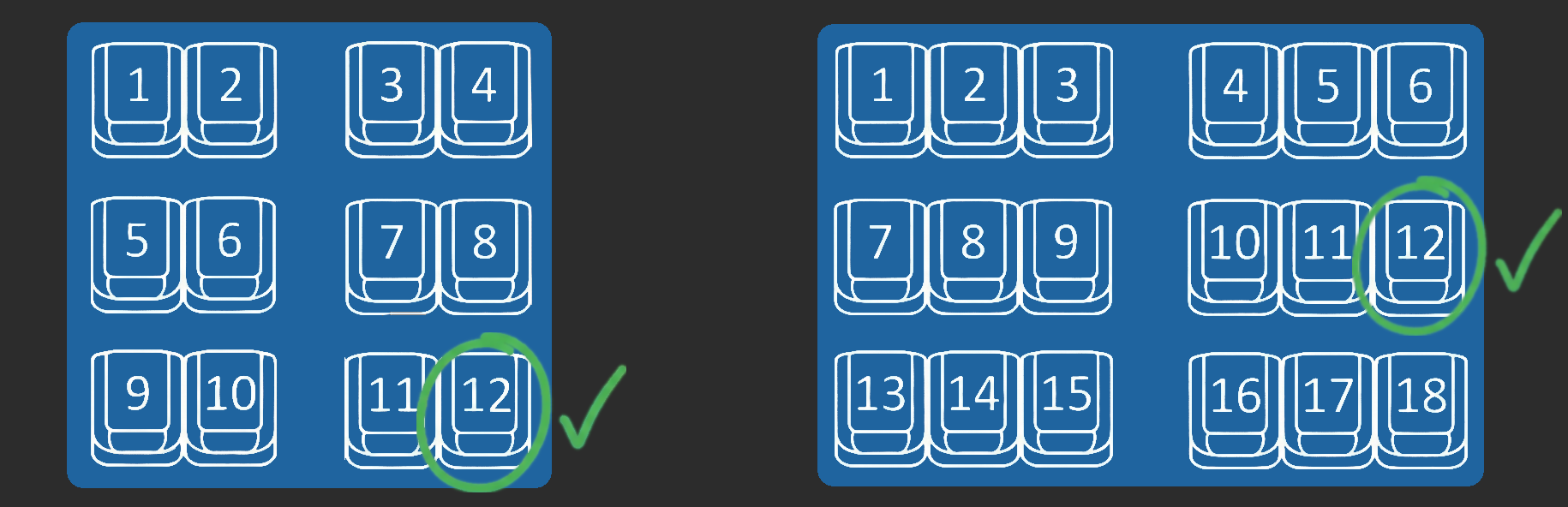
I even pictured them if, for some reason in Burma, they decide to start counting from zero:
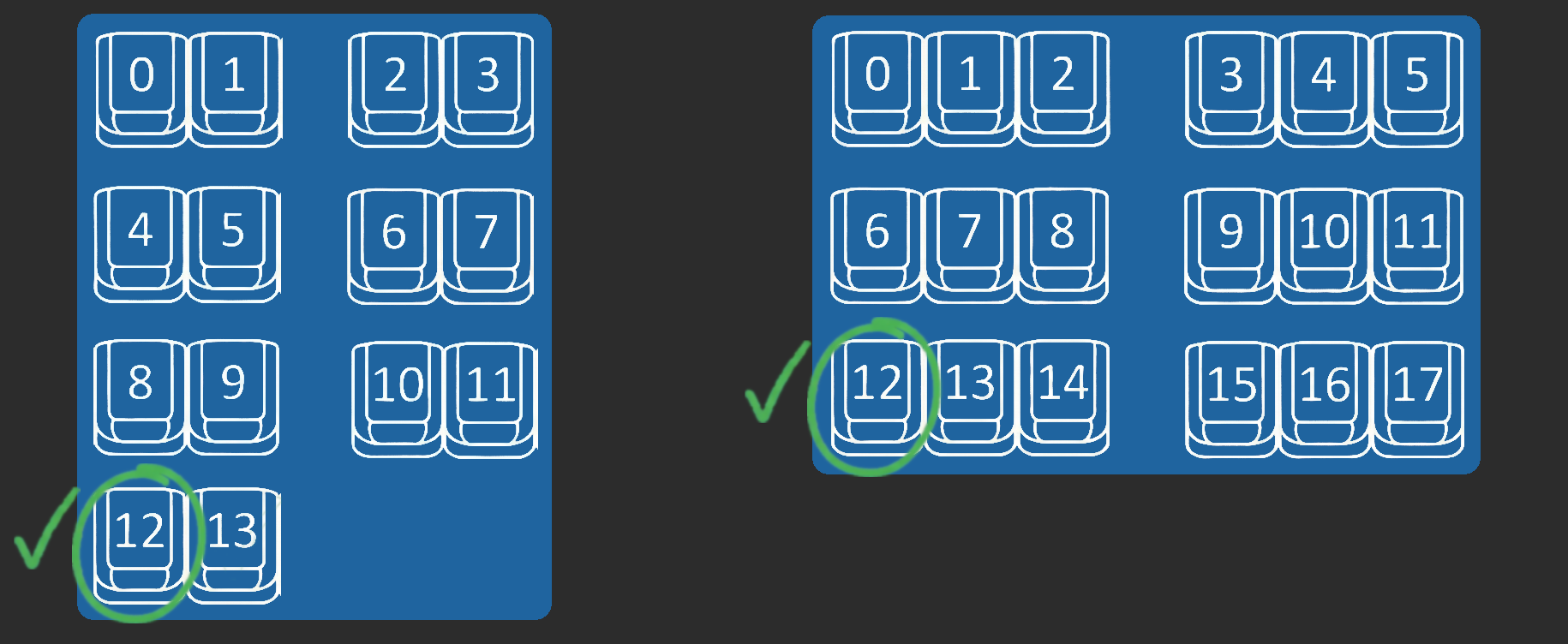
In all the layouts I could imagine, seat 12 was always a window. It was my last night in Bagan, and regardless of what time I woke up, I’d be spending the rest of the day on a bus. As an avid window-sleeper, this felt like a decisive item in the pro column. I assured myself that I could sleep on the bus, so I set my alarm to see the sunrise.
Not enough hours later, my alarm startled me awake. I hopped on a bicycle, sweating through the early morning and up a hill to a viewing area. I got there a few minutes early, with the sun just starting to peek out. The ancient pagodas surrounded me, starting as shadows in the dimly lit surroundings. As the light began to hit them their regular orange was replaced by a pastel pink. As the sun rose, hot air balloons followed. These too started as black shadows in the sky and then became distinct colored groups, each fleet with its own style. The slow march of rainbow over the softly lit stone was a feast for the eyes. I felt I had made the right decision.
To my planning mind, equally satisfying was what followed. I biked back, grabbed breakfast, and boarded the bus. Everything lined up just right, no rush needed. I smiled as I boarded, seeing two seats per row, the first row starting with 1. No shenanigans, a standard bus configuration (the first diagram above). While many things differ by culture, bus numbering systems appear to be universal. My mental calculation proved correct.
I approached my row, with confidence that seat 12 would be a window – and it was. A crucial detail awaited me, one that all my machinations couldn’t have anticipated. Seat 12 was not just already occupied, it was fully taken over. A blanket draped carefully, toys all around, and snacks tucked into the seat pocket. A young mother sat there with her baby on her lap. I smiled at them and, without hesitating, I settled into aisle seat #11.
One of the first things most people notice when they start meditating is how much thinking goes on in the mind. Recalling the past, wanting to change the present, thinking of the future. For me, planning is a very common theme. Planning often results from discomfort with uncertainty (grappling with not knowing what the future holds). Conversely, there can also be the pleasurable satisfaction of a plan properly coming together; this is what arose when I entered the bus and my previous night’s logic seemed to hold up.
If given enough space to meditate (a retreat helps), it becomes clear just how much planning the mind can do and how most of this mental activity is not useful. It can be easiest to see this when sitting quietly with nothing to be done. Taking action in the world does require some plan of action. To do so wisely means holding a plan lightly, knowing ultimately it is just a thought.
As Burns said: “The best-laid plans of mice and men often go awry”. One response to this is to fight, to try to make reality fit the plan. I could have done this on the bus – shown the mother my ticket, demanding she switched seats: the beloved window would’ve been all mine! This is definitely a strategy. Hopefully the particulars here demonstrate the folly in this approach. And just as importantly, the thrashing against reality would not have even guaranteed success.
Instead, I quickly saw the humor in my plan being so clearly foiled; my logic around seat number 12 being ultimately “right” and also meaningless1. And it all worked out. I rested fine in the aisle seat and had the entertainment of a cute baby next to me. While this is a somewhat trivial example of being ok with a plan failing, a simple situation can be the best one to learn from. This isn’t to say there are no plans worth pursuing, only that a plan failing shouldn’t inherently be a cause of stress. This is a fundamental teaching of the Buddha: our stress stems from discontent with the present.
One of my teachers, Tempel Smith, mentions lying in bed before sleep as a particular time to practice letting go of thoughts2. Rarely are the thoughts produced at this time useful, and they will most likely come up again in a more wakeful state if they are important. Remembering that teaching helped me not take my late-night planning so seriously.
A framing I’ve found helpful is to treat the brain producing thoughts just like the lungs producing air. It is simply what the brain does. Thoughts and plans can be valuable. But more often than not, like seat 12, they are worth letting go.
-
Noting the irony here of trying to convey not thinking too seriously while I spent the time drawing diagrams of my fruitless thought process :).
-
Here is a talk by him talking about the thinking mind (better than I do here).